
Let’s be honest: perimenopause isn’t just about hot flashes and mood swings.
It’s also about this weird feeling that your body is changing… without your permission.
You might be:
Gaining weight around your middle even though your diet hasn’t changed
Feeling softer, puffier, or more tired than usual
Struggling to recover from workouts you used to breeze through
Craving sugar and carbs like never before
And here’s what no one told us in our 30s: Protein becomes your best friend in your 40s. In fact, I’d argue that getting enough protein is your new part-time job.
Not in a punishing, rigid way. But in a steady, supportive, “this-is-how-I-take-care-of-myself-now” way.
Why Protein Matters More Than Ever in Perimenopause
In perimenopause, estrogen and progesterone start to decline. These hormonal shifts impact:
Muscle mass (which naturally decreases)
Metabolism (which slows with age and less muscle)
Blood sugar regulation (which gets trickier)
Appetite (you may feel hungrier or crave more sugar)
Protein is the nutritional antidote to all of that.
Here’s what getting enough protein can do for you:
Preserve and rebuild muscle mass
Support a healthy metabolism
Keep you feeling full between meals
Reduce cravings and energy crashes
Help with stable moods and blood sugar
Improve recovery from workouts
Protect bone health
And let’s not forget — protein is incredibly satisfying. Meals built around protein feel grounding and nourishing, not flighty and snacky.
How Much Protein Do You Actually Need?
Most women over 40 simply aren’t getting enough.
The old recommendation of 0.8g per kilo of body weight? That’s the bare minimum to avoid deficiency — not to thrive in midlife.
Current research suggests perimenopausal and postmenopausal women need:
1.6–2.0g of protein per kg of body weight per day
Spread over 3 meals, ideally 30g of protein per meal
So if you weigh 70kg, that’s 110–140g of protein a day.
That might sound like a lot — but it’s totally doable with a little planning (and your new part-time job mindset).
Think in 30s: What Does 30g of Protein Actually Look Like?
Here are some simple, balanced examples of what 30g of protein looks like — with approximate calories for each:
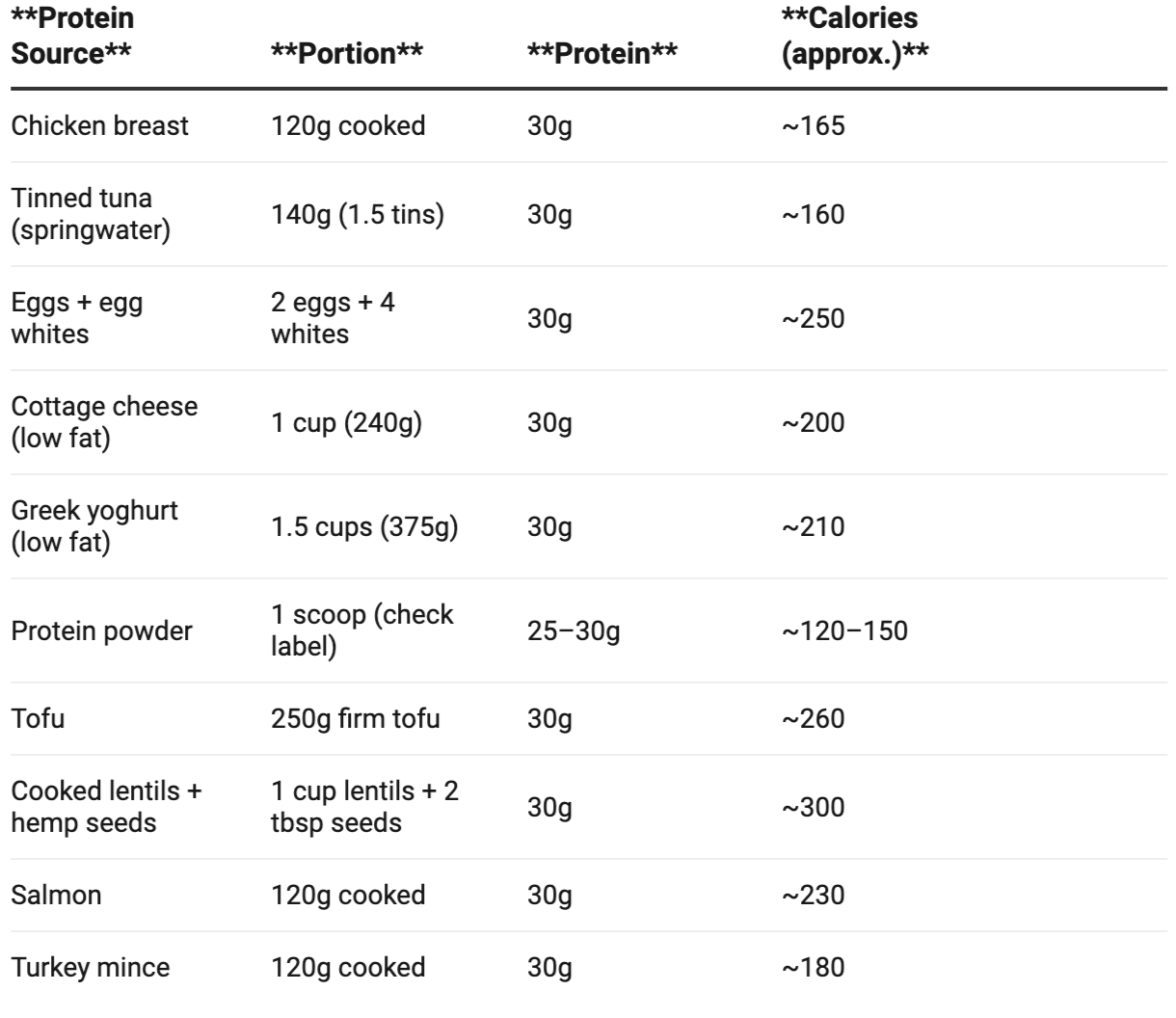
Note: Pair plant proteins with whole grains (like quinoa or brown rice) to round out the amino acid profile. Your body knows what to do.
A Typical Day With 30g of Protein at Each Meal
Here’s what your day might look like with that protein goal:
🍳 Breakfast
Blueberry protein pancakes with Greek yoghurt
(~30g protein, ~350–400 cal)
🥗 Lunch
Tuna + white bean salad with rocket, cherry tomatoes, and olive oil
(~30g protein, ~400–450 cal)
🍛 Dinner
Grilled tofu stir-fry with broccoli, tamari, and brown rice
(~30g protein, ~450–500 cal)
🥣 Snack (optional)
Cottage cheese with berries or a protein smoothie
(~20g protein, ~200 cal)
That’s 100–110g of protein, and you haven’t had to eat like a bodybuilder or live on eggs and lettuce.
Tips to Hit Your Protein Targets Without Stressing
💡 Build your meals around protein, not carbs
Start by choosing your protein source first, then add fibre-rich carbs and healthy fats.
💡 Prep ahead
Keep cooked chicken, lentils, tofu, or boiled eggs in the fridge so meals are quick.
💡 Embrace protein powders
A clean protein powder can be a game-changer when life gets busy. Blend it into smoothies, mix it with oats, or stir into yoghurt.
💡 Don’t forget snacks
Protein-rich snacks like cottage cheese, boiled eggs, or roasted chickpeas help you stay steady between meals.
💡 Track for a few days
Use an app like MyFitnessPal or Cronometer to track your protein for a few days. It’s eye-opening (and often the nudge we need to get serious about that 30g target).
It’s Not Just About the Scale — It’s About Strength, Mood, and Energy
Getting enough protein won’t magically melt belly fat overnight. But it will support every single system in your body that’s trying to recalibrate right now.
Think of it as a way to:
Anchor your meals
Build strength and resilience
Feel nourished, not deprived
Age well, not just shrink
Final Thoughts: Make Protein Your Midlife Power Move
You don’t need to obsess. But you do need to pay attention.
Protein is your ally in this next chapter — your steady, supportive co-pilot as you navigate hormonal changes, changing energy needs, and your desire to feel strong and steady again.
So yes, it’s a part-time job. But it pays in energy, mood, strength, and the ability to slip into your jeans feeling like you.
Need inspiration?
Grab my free [Perimenopause Meal Plan PDF] packed with 30g protein, 300-calorie meals made just for midlife women.
You’ve got this.